Only Epioxa is FDA approved to slow or halt KC with a safe, non-invasive corneal cross-linking treatment

Epioxa is a treatment performed by your doctor 1 eye at a time
Epioxa treatment is non-invasive because it does not remove the outer layer of the cornea, called the epithelium
Part 1
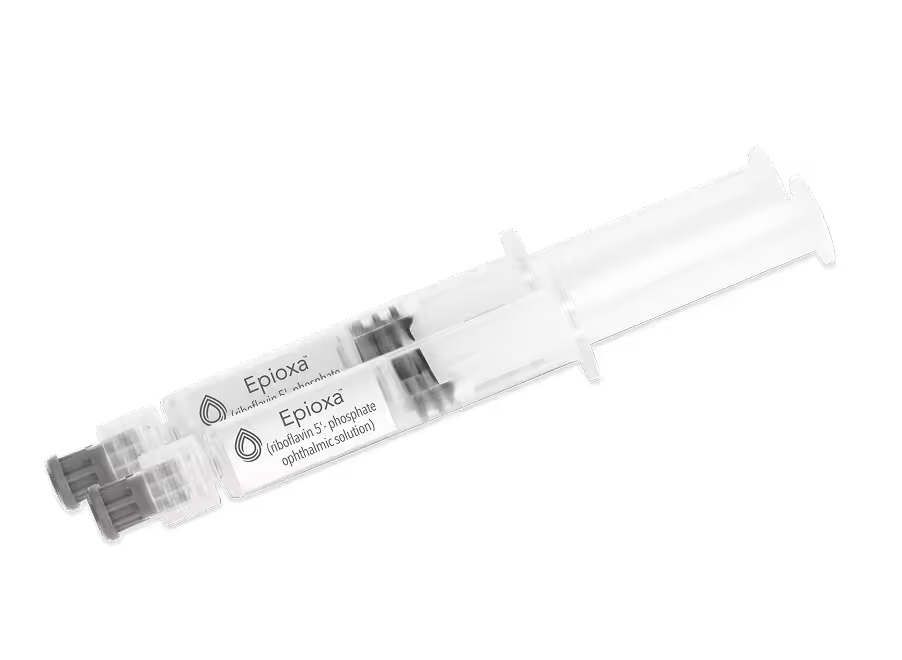
Light-enhancing Epioxa and Epioxa HD drops are activated by UV-light to cause the chemical reaction that makes cross-linking take place.
Part 2
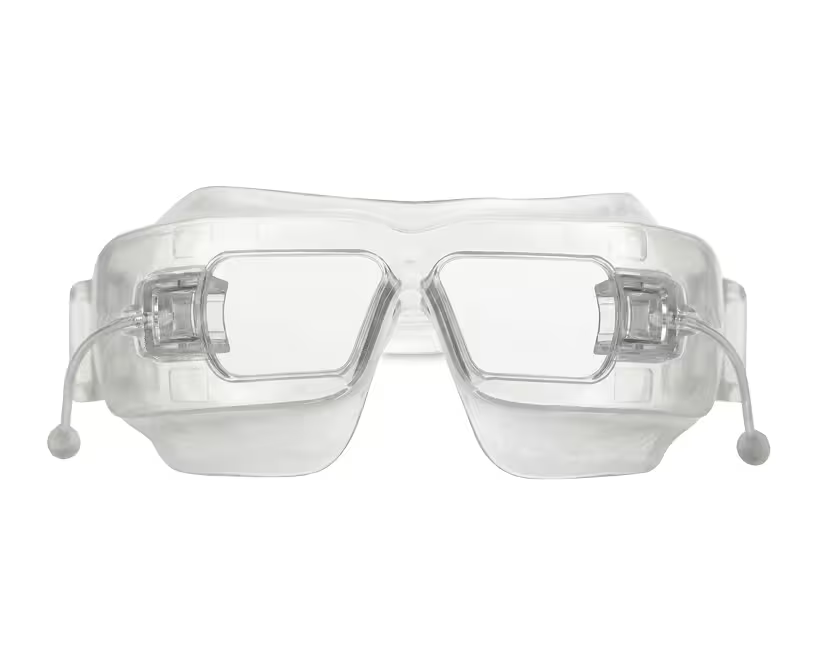
Boost Goggles® provide an oxygen-rich environment which is required for the cross-linking effect.
Part 3
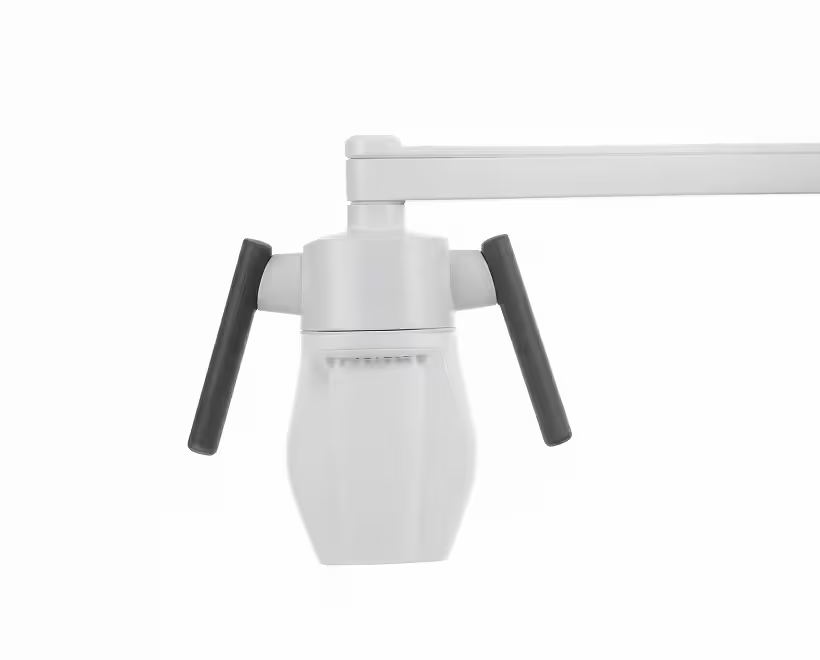
A special lamp delivers UV light which works with Epioxa eyedrops and oxygen to strengthen the cornea and help halt KC.
Epioxa treatment has 3 steps
1
Applying the eye drops
The doctor will apply the eye drops for a few minutes
2
Fitting the Boost Goggles® and ensuring oxygen is flowing
Next, the doctor puts the goggles on and turns on the oxygen to allow it to flow into the goggles
3
Corneal cross-linking with UV light
The special light source delivers UV light that works in combination with the eye drops and oxygen to strengthen the cornea
Contact your doctor immediately if you experience severe pain in the treated eye or any sudden decrease in vision.
You may feel some discomfort in the treated eye. Wearing sunglasses may help if you are sensitive to light after the treatment. Go home and rest. Do not rub your eyes. Take medications as prescribed by your doctor.
Download the Patient Brochure for all the information on Epioxa in one place


Epioxa treatment can halt KC progression so that you can keep your life in focus
Epioxa treatment was compared with placebo (no active treatment) in 2 clinical trials: Trial 1 was for 6 months, and Trial 2 was for 12 months.
At the start of each trial, doctors measured the steepness of the cornea’s curvature for each participant to determine the severity of their KC.

Before treatment
At the end of each trial, doctors measured how much the steepness of the cornea curve had changed.
Epioxa treatment
Flattens the steepness of the curve.

No active treatment
The steepness of the curve increased, and KC progressed.
Epioxa clinical trials included nearly 600 eyes of people with KC aged 13 to 55 years old.
The safety of Epioxa treatment was proven in 2 clinical trials
The most common side effects were mild and temporary
- Red eye
- Haze
- Sensitivity to light
- Disruption of surface cells of the cornea
- Eye pain
- Eye irritation
- Watery eyes
- Swelling of eyelid
- Fine white lines in the cornea
- Reduced sharpness of vision
- Dry eye
- Eye inflammation
Some people got their second eye treated as early as 1 week after their first eye was treated.
FDA=Food and Drug Administration; KC=keratoconus.
Patient support programs are available*
Find support programs*For eligible people who are commercially insured.
IMPORTANT SAFETY INFORMATION
The most common side effects were red eye, haze, sensitivity to light, disruption of surface cells of the cornea, eye pain, eye irritation, watery eyes, swelling of eyelid, fine white lines in the cornea, reduced sharpness of vision, dry eye, and eye inflammation.
You should not have the EPIOXA® corneal collagen cross-linking procedure if you have a known hypersensitivity to any ingredients in the product, have had cataract surgery and either did not receive an artificial lens in your eye or received a non-UV blocking artificial lens, have a history of herpetic keratitis, or are pregnant.
If you have any additional questions, please contact your doctor. Please see full Prescribing Information for EPIOXA HD and EPIOXA.
You are encouraged to report all side effects to the FDA. Visit www.fda.gov/medwatch, or call 1-800-FDA-1088. You may also call Glaukos at 1-888-404-1644.
APPROVED USES
The EPIOXA corneal collagen cross-linking procedure is performed by your eye doctor for the treatment of keratoconus. It does not require the removal of the corneal epithelium (outermost layer of the front of the eye). It consists of EPIOXA® HD (riboflavin 5′-phosphate ophthalmic solution) 0.239% and EPIOXA® (riboflavin 5′-phosphate ophthalmic solution) 0.177%, which are prescription eye drops used in combination with the O2n® System and Boost Goggles®.
The EPIOXA corneal collagen cross-linking procedure is for the treatment of keratoconus in adults and pediatric patients 13 years of age and older.